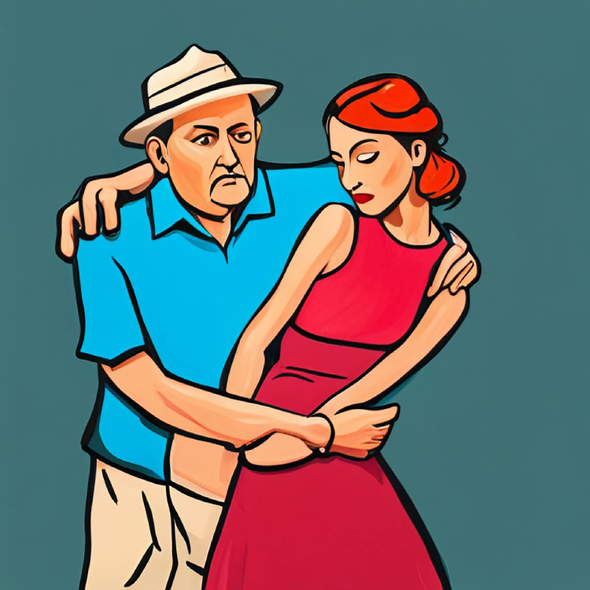
Dealing with a cheating spouse?

September 3, 2010

“I went to the bathroom and threw up”

If you want to be notified the next time I write something, sign up for email alerts or subscribe to the RSS Feed. Thanks for reading.

Elizabeth Edwards’ book Resiliance, addresses her reaction to her celebrity husband’s affair. In the book, she describes her reactions to the affair. Among those reactions were throwing up. Throwing up is a common reaction to news of an affair. When people are forced to face threatening information, throwing up and nausea are common responses. Part of the reason for this has to do with having to ingest something that we find ‘unacceptable’.

It is normal to have such strong gastric reactions. Such reactions do not indicate you are weak or in error. It reaffirms that you are alive. It reaffirms that affairs are not acceptable. It affirms that the events that transpired are not emotionally palatable.Many clients have such gastric reactions whenever they think about the affair that occurred.

So if you throw up, don’t freak out. Throwing up is a common reaction in such situations.

Best Regards,

Jeffrey Murrah

Technorati , , , , , , ,

Ghost affairs

Some couples while recovering from affairs find themselves dealing with ‘ghost affairs’. A ‘ghost affair’ is the term I use in referring to the residual image or afterglow of an affair.  What often happens is that the infidel reminisces about the affair relationship. These reminisces often take on a romanticizing of the events and persons involved. When engaged in the ghost affair, the person is mentally and emotionally reliving the events of the affair. Physically they may be in the home, yet the other parts of their being are still engaged and connected to the adulterous party.

When ghost affairs are occurring, there is often an emotional reaction from the resolute spouse. It is as if there is an instant replay of the affair all over again. Marriage relationships do not work well with three or more people caught in a drama triangle. The marriage relationship works best with two people loyally committed to one another. The entrance of a third party either physically or through ‘ghost affairs’ often has emotional repercussions.

Ghost affairs can also occur with widowers and widows as well when they are emotionally reliving their previous marriage with their now dead spouse.

Ghost affairs, like all other infidelities needs to be discussed and worked through. Although the person in the midst of such a relationship will deny that there is any relationship going on, the resolute spouse senses what is going on. The emotional pain will still need to be addressed.

Best Regards,

Jeffrey Murrah

Technorati , , , ,

Who is she, really?

A major part of affairs concerns fantasy. In some ways, an affair shares similarities with a connect the dots game, except with affairs, many of the dots you want to connect are missing. One area where they are missing regards the ‘other woman’ (or other man). Although the infidel reports being in love with them, oftentimes they know very little about that person. They know how they feel when they are with that person, and those internal sensations often over ride common sense and keep them from seeing what is actually going on. While in the midst of the fantasy, the other person is viewed as ‘the person who completes them’ or ‘the love of my life’ or ‘my ideal woman’. Even in the language used to describe the other women, there are themes of incompleteness that will only be satiated when they are with their lover. The lover in many ways becomes an idol which the infidel views as all their hopes, their salvation, their purpose, their completion. What they do not see is that their fantasy lover is a figment of their imagination. They do not see the other woman for who she is. They do not see where the relationship with the lover will actually take them. They often do not know much about that person’s past.

When things really get out of control, they marry their lover, only to be surprised when their lover has an affair on them. At that point, they wonder who it was that they married. They ask themselves questions like “How could she do this to me?”. When such situations occur I often want to remind them that they are being true to their nature. They were not loyal to their first spouse, they disregarded your previous marriage, so what made you think they would change? The person did not get to know the lover for who they really were.

Best Regards,

Jeffrey Murrah

Technorati , , , , , , , ,

No One Leave a Good Lover, except a sex addict

At a conference I attended, the presenter made a remark which has stuck with me over the years. He said, “No one leaves a good lover except a sex addict”.  This is one of those statements that has more meaning as I meditate on his statement. One of the truths that I have realized is that when a spouse is content with their partner, they do not look elsewhere for their needs. When the needs are being met at home, there is no reason to look elsewhere.

One of the fallacies concerning affairs is the belief that “something is wrong and an affair will fix it.” Affairs seldom solve anything. Cheating only serves to distract and create other problems. The affair only serves to change the battlefield and who the antagonists are in their struggle in facing reality and needs for intimacy.

When a cheater leaves their spouse, assuming that their sex life was healthy, the possibility of a sexual addiction is something to seriously consider.

The hard part of the saying involves getting honest with oneself and ones spouse concerning whether or not they were a ‘good lover’ and what it means to be a good lover. The definition of a good lover often changes between your twenties and your forties. It will also be important for you and your spouse to share a common definition of what a good lover is and how each of you want and need to be loved.

Here’s to good lovers.

Best Regards,

Jeffrey Murrah

Technorati , , , ,

Do you really want to save your marriage?

Although it seems an odd question to pose, some couples caught in affair situations do not make the choices and changes necessary to save their marriage.

Instead, one major offender is that they make choices that keep the existing patterns, and the associated pain going. It is almost a matter that it is easier to deal with a familiar pain than to face the unknown associated with making changes to the relationship. Sadly, the familiarity of routine or “we have always done it this way”  is more important to them than to change their routine or relationship.

It is common for the hurt spouse to bemoan their circumstance, yet resist efforts to change it. At that point, they are attaining greater payoffs for maintaining their pain and martyrdom than are offered by modifying their relationship.

The other major offender is that of pride. Instead of swallowing pride, admitting mistakes and being willing to hear their spouse out, they prefer to maintain their pride. Rather than seek help, they will try to do it on their own. They will deny that there are any problems. The assumption is that they just need to  ‘suck it up’. Like a Hollywood movie, they hope for a miraculous ending or divine intervention rather than make changes. Holding to pride, even religious pride can become a stumbling block to saving your marriage.

So that brings me to the question, “Do you really want to save your marriage?” In order to save your marriage, you may need to change your thinking, your behavior and your attitude, even if it costs some pride, and discomfort as you make the needed changes.

Best Regards,

Jeffrey Murrah

Technorati , , , ,

Building up to the affair

Contrary to the excuses made concerning affairs, they don’t ‘just happen’. When a cheating spouse is found out, they may come across as sincere in their bewilderment as to how such a thing could have happened. The offending spouse may have been totally unaware of the events leading up to the infidelity and when they tell you that it ‘just happened’ they mean what they say.

Prior to an an act of infidelity, there is a build-up leading to the affair. The build-up is often internal. The soon to be offending spouse often distances themselves from their spouse physically or emotionally prior to an affair. (In some cases, they do the opposite just for the sake of throwing things off). Whether they do their distancing by either drawing further away of becoming overly close, these are signals that something is up. The soon to be offending spouse has likely entertained the fantasy of an affair and often has to work up their nerve and courage before carrying out their fantasy. Vocations which involve high levels of entertaining, high cash flow and large amounts of unstructured time are particularly at risk.

It is during that build up that the last opportunity exists to prevent an affair from taking place. The infidel to be in some cases takes on a ‘glazed’ look which is another indicator that something is about to unfold.

There are many other early warning signals to look for. These signals often vary from person to person. What is clear is that there are often signals being sent out that broadcast their actions, if the resolute spouse is alert and saavy enough to pick up on them.

Best Regards,

Jeffrey Murrah

Technorati , , , ,

Temptations are all around us

In listening to some selections from my music collection, I heard the song “Temptation Eyes” by the Grass Roots. The song contains some basic truths of use for those struggling with infidelity and temptation. Temptation and affairs often go together. There are also several temptations at work at any given time. There is the temptation to have the affair, the temptation to pay the disloyal spouse back either with a payback affair, spying, hurting them back or even legal paybacks for the affair. It is not only the couple, the other woman/man may also find themselves struggling with the temptation to call the spouse, engage is some extreme behavior or engage in paybacks themselves. With this being the case, at any given time, each of the primary parties involved are struggling with temptation. When the secondary social atom is examined, there are further temptations. The parents, children, relatives or friends of those involved in the affair often experience temptations as well. These parties also have a wide range of emotions that they are tempted to ‘give in to’. At some levels, it may be the temptation to speak out and say something or in some cases to ‘take things in their own hands’ and do something extreme.  Their actions may be either direct or indirect in nature.

The interplay of all the parties involved is similar to a mobile spinning through space. Each part of the social world has some relationship and effect on the other parts. The values, drives, desires, morals and passions of each party exterts its influence on the affair situation and relationship. The parties involved in the affair may tell themselves that it only concerns them in order to avoid having to face the many complicated relationships at work. The choices made concerning whether to give in to or resist temptation have a ripple effect on all the parties involved either through primary or secondary relationships. The temptation you give in to may start a series of action-reaction that was never imagined. Consider the potential impact of choices before making them

Best Regards,

Jeffrey D. Murrah

Technorati , , , , , , ,

Punish me!

After an affair has been discovered, one of the challenges couples face concerns the issue of punishment. The resolute spouse often feels the desire to punish the offending spouse who was involved in the affair. The type and severity of punishment often varies from couple to couple. For some couples, the punishment is corporal. A literal punishment is delivered to the offending spouse. Other couples resort to emotional or social punishment. The punishment may vary from public put downs, to being grounded from the bedroom or grounded to the home. When couples resort to punishment, the dynamics of the relationship changes. The couple are no longer two people working together, they become a master and slave, a penitent and a punisher. The power dynamic in the relationship distorts.

Besides the danger of turning the relationship into a power struggle, another danger of punishment concerns conscience. When punishment is admnistered, the offending party feels relieved. This relief is driven more by the punishment than by contrition or remorse concerning the affair behavior. In other words, punishment short circuits the guilt guilt process. It takes away the pain so that the affair and the associated issues will not have to be talked about or worked through. The mindset is that once the punishment is administered, the affair and its aftermath are over.  Since punishment is a quick fix to the pain, it is not surprising that the offending spouse will want the resolute spouse to punish them. If you want to work through the issues, it is important to not give in to such urges.

Best Regards,

Jeffrey Murrah

Technorati , , , , ,

Are all affairs malicious?

One of the questions often asked of affairs is ‘why?’ Although the question is often asked, not many couples seek a full understanding of dynamics. Most often they want to find someone to blame or something to blame. The why question is asked only to ascertain whose fault it is. When questions are asked only to discover where the blame lies, the couple miss out on understanding the situation and themselves.

Some affairs are malicious in nature. Some spouses engage in adultery for paybacks, to send a message or inflict some type of pain. In many cases, the affairs are not malicious. They often start off with legitimate needs. Needs for affection, attention, or admiration. There are needs that had not been satisfied in the marriage. Even in the case of sexual addiction, the affairs are not about being malicious and hurting, but are driven by needs.  The needs themselves are not the problem. What does become problematic are HOW the spouses address those needs. Their solutions to the problems often cause more problems than the original needs themselves. They make poor choices in meeting their needs. Obtaining an understanding of what the needs of your spouse are, and how did they view the affair as meeting those needs are the kinds of questions that provide understanding rather than blaming. Finding answers to these types of questions take the couple in a healthier direction.

Best Regards,

Jeffrey Murrah

Technorati , , , , , ,

The Dark Side of Swinging

Although the practice of ‘swinging’ is portrayed as hip and cool, the reality is often very different. What was once labeled as ‘wife swapping’ or ‘open marriage’ has been given the title of swinging in order to have more mass appeal.

I cannot speak for all swingers, but only for the ones that I have worked with. I have seen the brokeness that swinging produces and the damage it leaves in its wake. Many wives are caught up in swinging at the insistence of their spouses. Since they want their husbands to be happy, they initially go along with the idea.

First, swingers have to find a way into the ‘network’. In each city that has a swinging network, there are prescribed places to meet that have been pre-selected ahead of time. One must be ‘in the know’ in order to have awareness of which club they need to attend that evening. The clubs often charge a fee, with a required number of drinks for the couple. Initially there is either fear of the unknown or the excitement of dressing up and going somewhere filled with activity. Children are often sent off for the weekend in order to avoid embarrassing moments associated with being found out.

Once at the pre-selected club, the couples mingle, drink and dance. After a few hours, the alcohol kicks in and then it is time for a ‘get-together at someone’s home, retreat or boat’. The locations are often very exclusive, which adds a sense of unreality and fantasy to what is going on.

When the lifestyle begins, there is plenty of excitement at doing something different and dangerous. Once the couple becomes immune to the danger and conscience, the excitement of dress up and drama associated with human relationships often takes over to keep the adrenalin pumping. The spouse engages in activities that they may find distasteful only because it pleases their spouse. In this mix of people, emotion and alcohol, the feelings of arousal and pleasing the spouse are often confused.

The result is a lifestyle full of secrets, guilt, shame and remorse. Yes there was excitement, although there are often more memories of things they wish to forget. There is the anxiety or running into someone from ‘the club’. There is the possibility of someone finding out that they do not wish to find out. It becomes another world with its own set of rules and control over the people. It becomes a world that owns the couple rather than them owning their own world. The glamor is deceitful. It tricks people into a lifestyle that will change them and their conscience forever. It is a glossy way to hide sexual addictions and affairs and try to make them acceptable.

When the parties are over, the couple are often left with the reality that the swinging was nothing more than affairs and orgies on a grand scale.

Best Regards,

Jeff Murrah

Technorati , , , , , , ,